
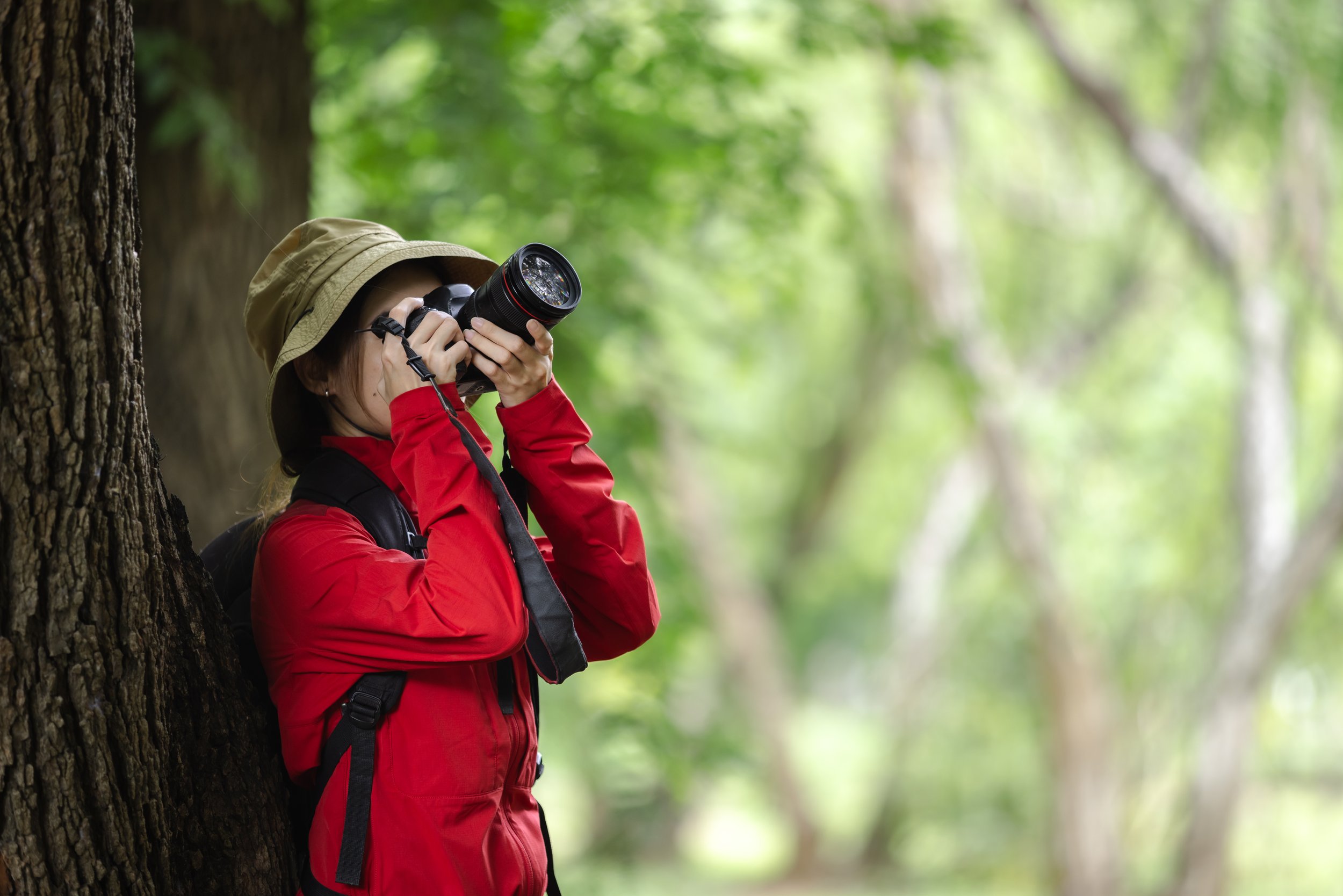
Hiker observing birds
The Algarve is famous for its golden beaches and dramatic cliffs, but for nature lovers, it is also one of Portugal’s richest regions for birdlife. Thanks to its mild climate, wetlands, estuaries, and varied landscapes, the region attracts both resident and migratory species throughout the year.
If you enjoy observing wildlife, you must find out these 11 birdwatching spots in the Algarve. The best way to explore these natural habitats with total freedom is certainly by car.
1. Alcoutim and the Guadiana River
The historic village of Alcoutim overlooks the valley of the Guadiana River, which forms the natural border between Portugal and Spain.
Location: Northeastern Algarve.
Best time of the year for birdwatching: Spring and autumn migration.
Abundant birds: Black kites, griffon vultures (occasionally), bee-eaters, hoopoes, ospreys, black-winged kites, herons, and cormorants.
Getting there: Access via the N122 from Castro Marim. Parking available along the riverfront in Alcoutim.
Curiosities: The valley’s thermals attract raptors, while boat trips along the river offer excellent riverside birdwatching opportunities.
2. Foz de Odeleite
Foz de Odeleite lies at the confluence of the Odeleite River and the Guadiana.
Location: Near Alcoutim.
Best time of year for birdwatching: Spring and autumn.
Abundant birds: Grey herons, kingfishers, cormorants, bee-eaters.
Getting there: From Castro Marim, follow signs to Odeleite and Foz de Odeleite. Limited roadside parking available.
Curiosities: Calm waters attract both aquatic birds and migratory passerines.
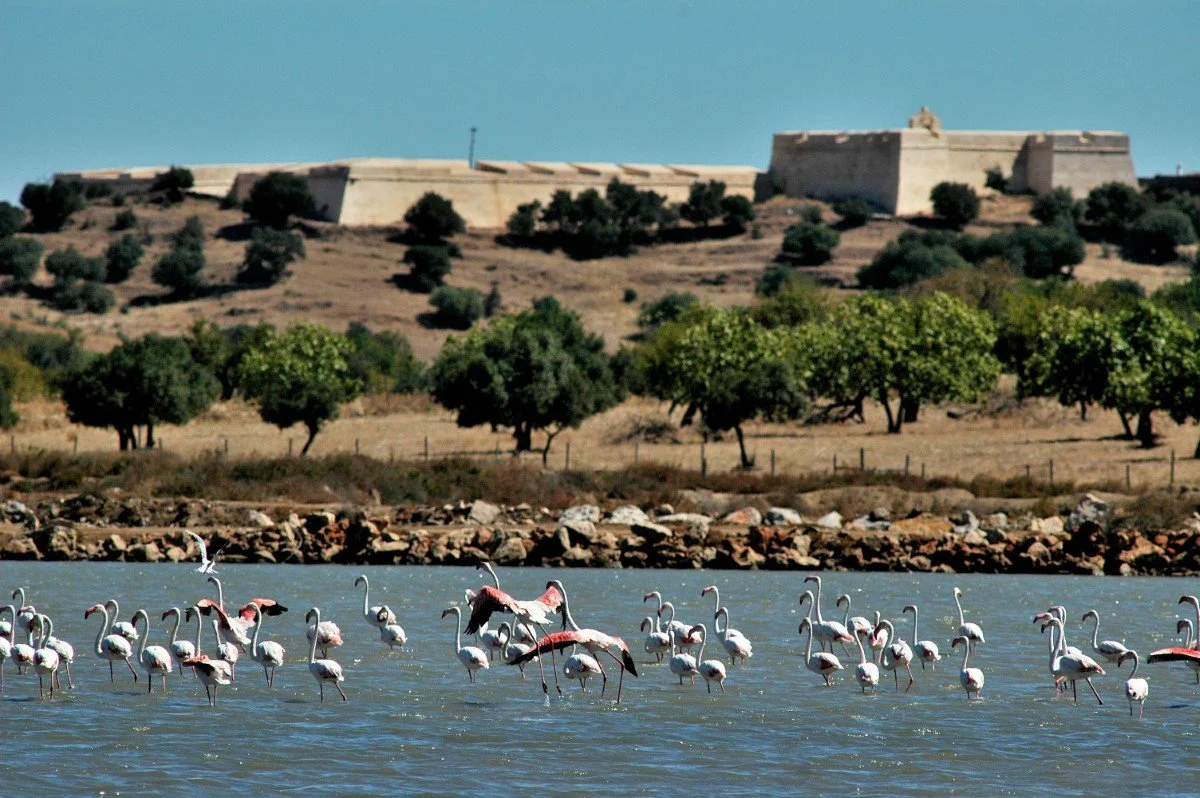
Flamingos at Reserva Natural do Sapal de Castro Marim e Vila Real de Santo António (©BeCool)
3. Castro Marim and Vila Real de Santo António Marsh Natural Reserve
The Castro Marim and Vila Real de Santo António Marsh Natural Reserve is one of southern Portugal’s most important wetland areas. With traditional salt pans, marshes, and tidal flats, it provides essential habitat for waders and waterbirds throughout the year.
Location: Castro Marim, Vila Real de Santo António.
Best time of the year for birdwatching: Winter and early spring.
Abundant birds: Greater flamingos, pied avocets, black-winged stilts, Kentish plovers, little egrets, white storks, and marsh harriers.
Getting there: From the A22 (Via do Infante), take the Castro Marim exit and follow signs to the Nature Reserve. Parking is available near the visitor centre and along access roads to the salt pans.
Curiosities: The different water levels maintained in the salt pans create varied feeding conditions, attracting large concentrations of flamingos during the winter months.
4. Serra do Caldeirão
Serra do Caldeirão marks the ecological transition between Algarve and Alentejo.
Location: Algarve interior (Loulé, São Brás de Alportel, and Tavira).
Best time of the year for birdwatching : Spring.
Abundant birds: Azure magpies, short-toed eagles, Bonelli’s eagles, woodlarks, red-rumped swallows.
Getting there: Accessible via regional roads from Loulé or São Brás de Alportel. Parking near villages and trailheads.
Curiosities: Cork oak landscapes support diverse bird communities.
5. Ria Formosa Natural Park
One of Europe’s most important wetland systems, Ria Formosa Natural Park stretches over 60 kilometres along the eastern Algarve.
Location: Faro, Olhão, Tavira and Loulé.
Best time of the year for birdwatching: Autumn and winter for migratory species; spring for breeding birds.
Abundant birds: Greater flamingos, black-winged stilts, pied avocets, spoonbills, little egrets, ospreys, and purple swamphens.
Getting there: Easily accessible from Faro via the EN125. Main access points include Quinta do Lago, Olhão’s waterfront and Tavira Island. Parking is available near visitor centres and beach entrances.
Curiosities: This Ramsar-listed site is one of southern Europe’s key wintering grounds for waders and flamingos.
6. Loulé Coastal Lagoons
The Lagoas Costeiras de Loulé, located between Vale do Lobo and Quinta do Lago, form part of the wider Ria Formosa system but offer quieter observation areas.
Location: Loulé municipality (Vale do Lobo / Garrão area).
Best time of year for birdwatching: Autumn and winter.
Abundant birds: Flamingos, black-winged stilts, Kentish plovers, little terns, sandwich terns, and grey herons.
Getting there: From Almancil, follow signs to Vale do Lobo or Garrão Beach. Small parking areas are available near beach accesses and lagoon entry points.
Curiosities: These shallow lagoons are particularly active during low tide when mudflats become prime feeding grounds.
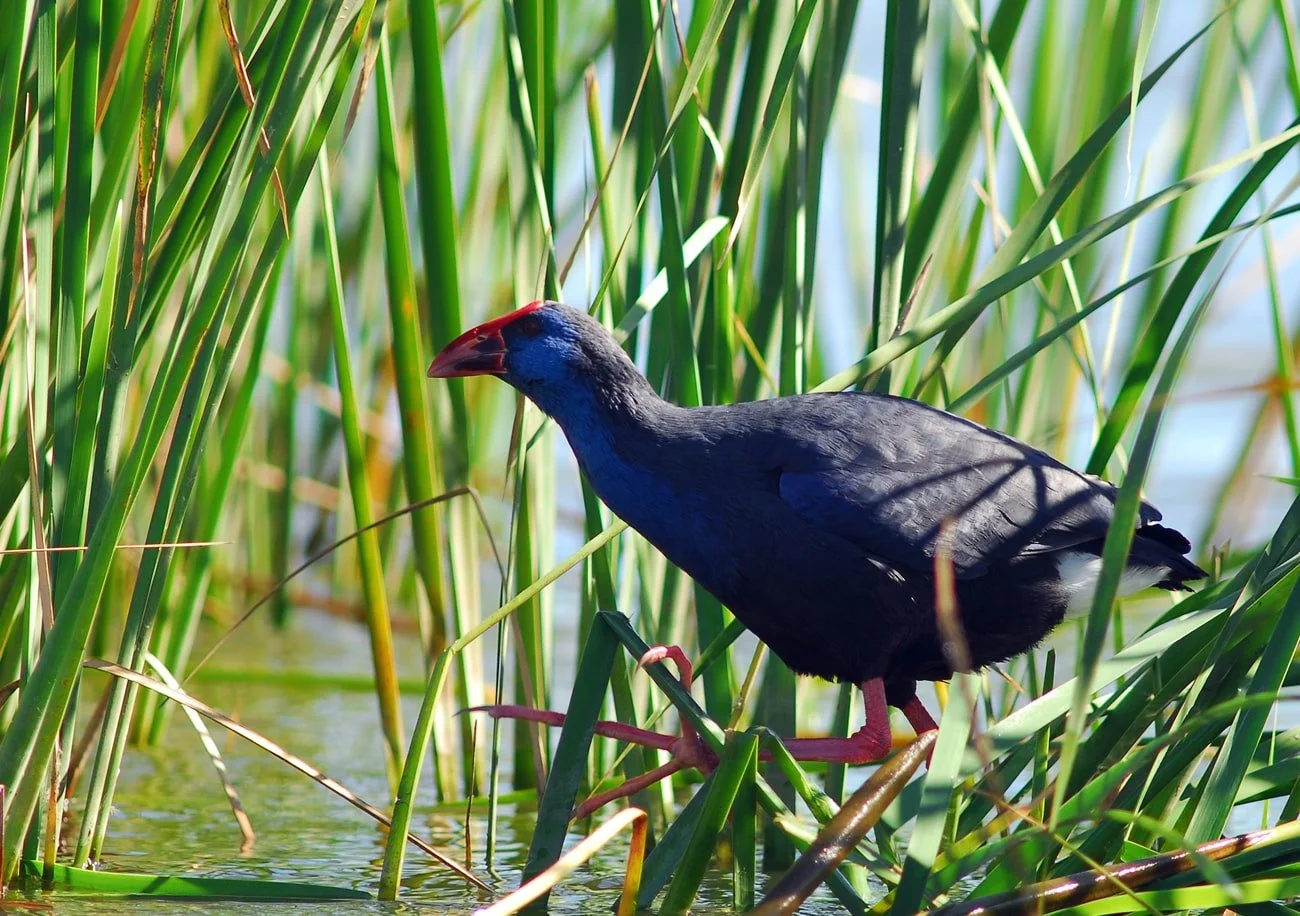
Purple swamphen at Parque Ambiental de Vilamoura
7. Vilamoura Environmental Park
Vilamoura Environmental Park surrounds freshwater reservoirs and pine woodland.
Location: Vilamoura, Loulé.
Best time of the year for birdwatching: Spring and early summer.
Abundant birds: Purple swamphens, little grebes, hoopoes, Sardinian warblers, booted eagles.
Getting there: Follow signs from the EN125 to Vilamoura and then to the “Parque Ambiental”. Dedicated parking available.
Curiosities: Ideal for woodland and freshwater species away from busy coastal areas.
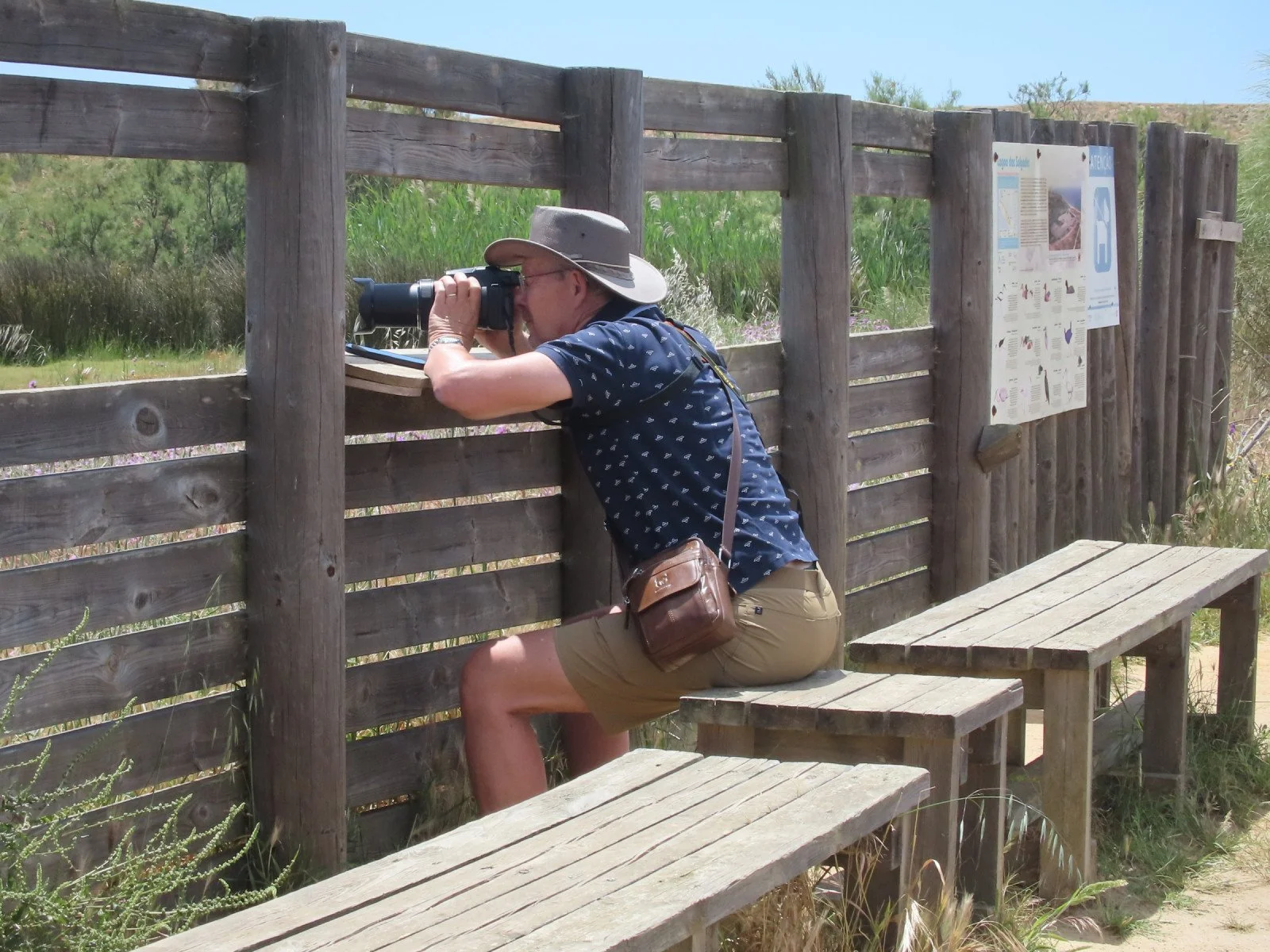
Birdwatcher at Lagoa dos Salgados (©Ek Van Kampen)
8. Lagoa dos Salgados
Lagoa dos Salgados is one of the Algarve’s top birdwatching spots, featuring a long wooden boardwalk with excellent views over the lagoon and its wildlife.
Location: Between Albufeira and Armação de Pêra.
Best time of the year for birdwatching: Year-round, with peak diversity in autumn and winter.
Abundant birds: Flamingos, purple herons, black-winged stilts, spoonbills, glossy ibises, marsh harriers.
Getting there: From the EN125, follow signs to Praia dos Salgados or Praia Grande. Parking is available at both ends of the boardwalk.
Curiosities: Viewing platforms allow close observation without disturbing wildlife.
9. Ria de Alvor
Ria de Alvor combines dunes, mudflats, and shallow lagoons.
Location: Alvor, Portimão.
Best time of the year for birdwatching: Autumn and winter for waders.
Abundant birds: Flamingos, grey plovers, dunlins, spoonbills, ringed plovers, ospreys.
Getting there: Follow the EN125 towards Alvor. Access via the Alvor Boardwalk. Parking is available near Praia de Alvor and Cais dos Pescadores.
Curiosities: Extensive mudflats at low tide attract large flocks of feeding shorebirds.
10. Serra de Monchique
Serra de Monchique offers forested mountain habitats.
Location: Monchique.
Best time of the year for birdwatching: Spring.
Abundant birds: Bonelli’s eagle, short-toed snake eagle, firecrest, Eurasian jay, woodpeckers.
Getting there: Follow the N266 towards Monchique and Fóia. Parking available at viewpoints.
Curiosities: Elevated terrain improves raptor visibility.
11. Cape St. Vincent (Cabo de São Vicente)
Cape St. Vincent is one of Portugal’s premier migration watchpoints.
Location: Sagres.
Best time of the year for birdwatching: Autumn.
Abundant birds: Peregrine falcons, booted eagles, short-toed eagles, kestrels, swifts, seabirds.
Getting there: From Lagos, follow the N125 and N268 towards Sagres. Parking available near the lighthouse.
Curiosities: Strong thermals assist migrating raptors crossing to Africa.
Don’t miss out: Sagres Birdwatching & Nature Activities Festival
Every October, Sagres hosts the internationally recognised Sagres Birdwatching & Nature Activities Festival, centred around Sagres and the Southwest Alentejo and Vicentine Coast Natural Park.
The programme includes guided field trips, pelagic boat tours, workshops and lectures, making it one of Portugal’s most important bird migration events.
With a car, visitors can easily move between coastal cliffs, inland valleys and observation points throughout the region.
