
Beyond the airport: the best places to visit in Faro and surroundings
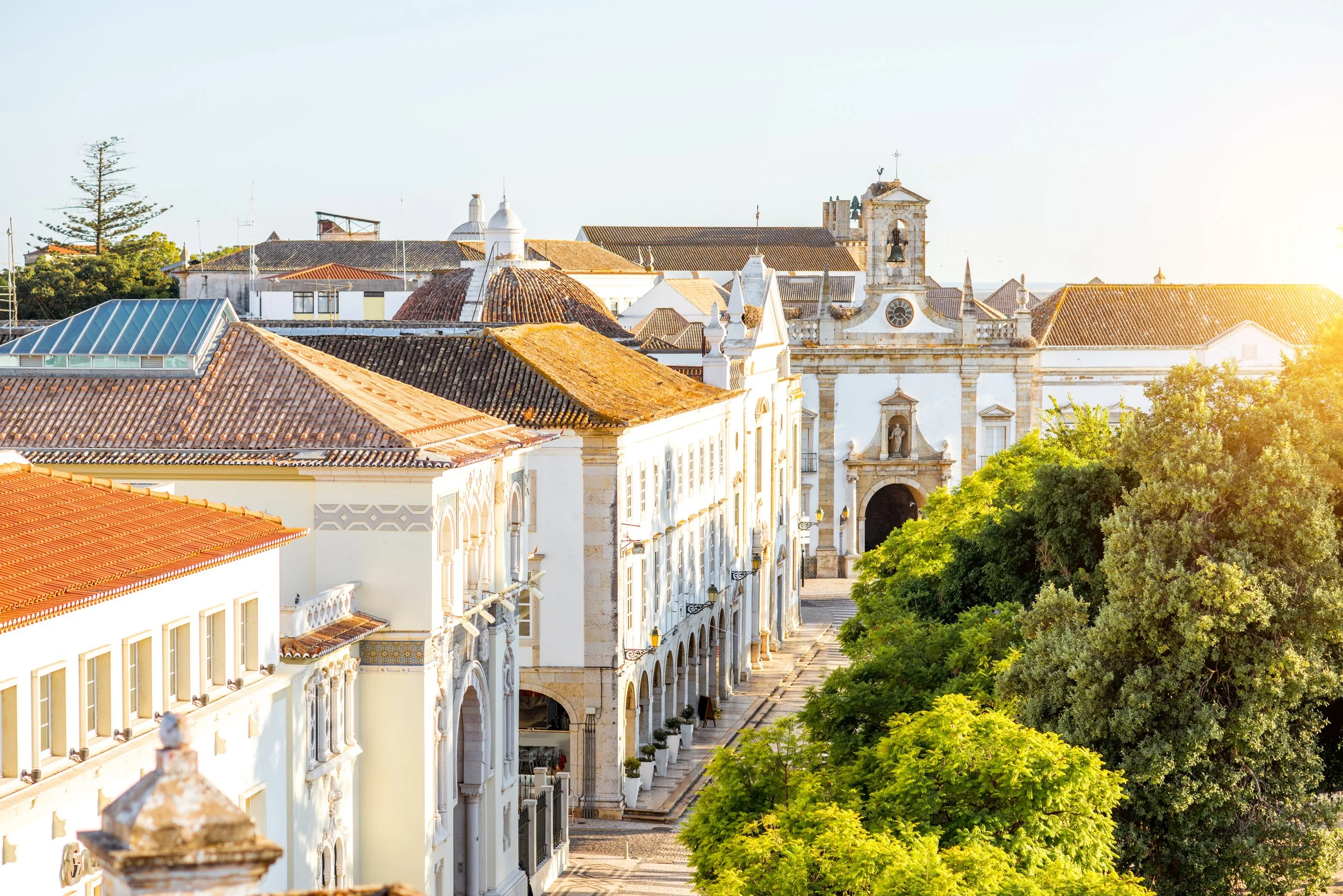
Top view of Jardim Manuel Bívar, in Faro
Faro, the capital of the Algarve, offers a sophisticated blend of historical depth, ecological wonders, and a relaxed Portuguese atmosphere. Often bypassed by travellers heading straight to resort towns, Faro rewards those who stop with its ancient city walls, a labyrinthine Old Town, and the pristine lagoons of the Ria Formosa.
Here is a guide to the best places to visit in Faro, along with practical tips for your journey.
1. Faro Old Town (Cidade Velha)
Location: Central Faro, enclosed by medieval walls.
Getting there: Follow signs for “Centro Histórico” or “Vila-Adentro”. Access is primarily through the monumental Arco da Vila.
Parking: A large free parking zone is located to the southeast of the city (GPS: 37.01, -7.93), roughly a 10-minute walk from the Old Town gates.
About: This historic heart is a maze of cobblestone streets and orange-tree-lined squares. It features landmarks like the Faro Cathedral and the Municipal Museum, the latter housed in a beautiful 16th-century former convent.
Curiosities: The Arco da Vila was built over one of the original medieval gates and contains the Arab Gate, a rare and well-preserved example of Moorish architecture in its original location.
Nearby: Walk to the Arco do Repouso, where legend says King Afonso III rested after conquering the city from the Moors in 1249.
2. Faro Marina (Doca de Faro)
Location: Just outside the Old Town walls.
Getting there: Easily reached on foot from the city centre or by car following signs for the "Marina".
Parking: Paid parking is available in the underground lot at Praça da Pontinha or surrounding street spots.
About: A modern and lively harbor where yachts bob in the water and cafés line the promenade. It serves as the primary departure point for boat tours exploring the Ria Formosa islands.
Curiosities: While the marina is modern, Faro has been a trading port since Roman times, and the nearby Maritime Museum showcases the region's long seafaring heritage.
Nearby: The Manuel Bívar Garden is right next to the docks, offering a shady spot for people-watching.
3. Sé Catedral (Faro Cathedral)
Location: Largo da Sé, in the heart of the Old Town.
Getting there: Best accessed on foot after parking near the Old Town.
About: Consecrated in 1251, this cathedral is a tapestry of architectural styles including Gothic, Renaissance, and Baroque. The interior features intricate gilded carvings and 18th-century tile panels.
Curiosities: Climbing the narrow steps to the bell tower provides one of the best panoramic views over Faro’s rooftops and the Ria Formosa lagoon.
Nearby: The Episcopal Palace (Paço Episcopal) sits directly across the square.
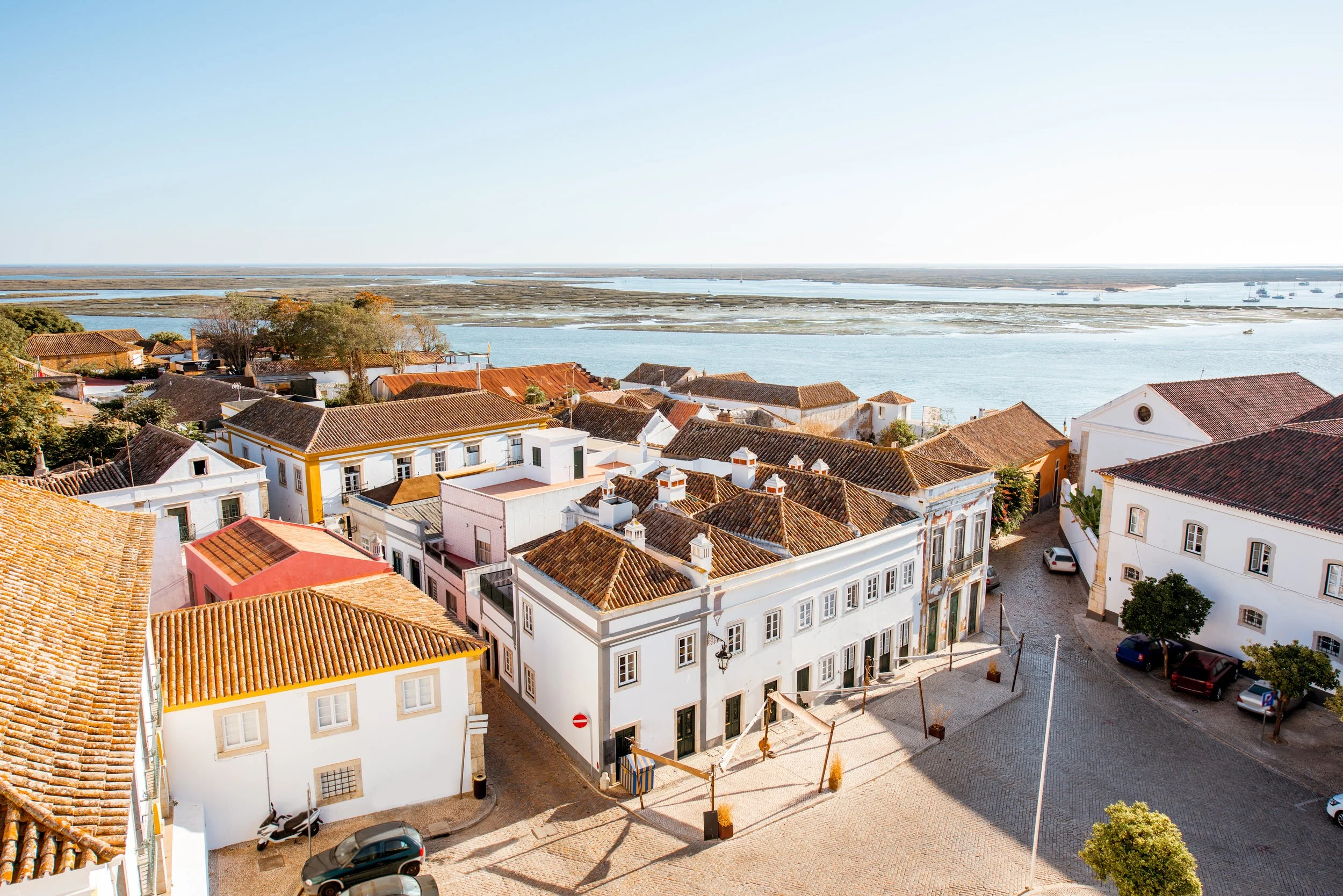
Panoramic view of the rooftops in Faro old town and Ria Formosa
4. Ria Formosa Natural Park
Location: A coastal lagoon system stretching 60 km along five municipalities: Loulé, Faro, Olhão, Tavira, and Vila Real de Santo António.
Getting there: Access is primarily by boat from Faro Marina.
About: One of Portugal’s "Seven Natural Wonders", this protected area is a paradise of canals, marshlands, and barrier islands. It is a critical habitat for birdlife, including flamingos and herons.
Curiosities: The park is home to one of the world's largest populations of seahorses, though they are rarely seen without a guided diving tour.
Nearby: Take a ferry or boat trip to Ilha Deserta (Deserted Island) for untouched beaches and the southernmost point of mainland Portugal.
5. Faro Island (Praia de Faro)
Location: 9 km west of the city centre, near the airport.
Getting there: Accessible via a narrow bridge by car.
Parking: Free parking is available near the beach entrance, though it can be very crowded during summer.
About: A long stretch of golden sand that separates the Atlantic from the lagoon. It has a relaxed, local vibe with plenty of seafood restaurants and bars. It is also a very popular beach among surfers.
Curiosities: Despite being called an island, it is actually a peninsula (Península do Ancão), but its narrow connection to the mainland gives it a secluded island feel.
Nearby: The Ludo Nature Trail is close by, perfect for a walk or cycle through the salt pans.
6. Carmo Church and the Chapel of Bones
Location: Largo do Carmo, North of the city centre.
Getting there: A 5-10 minute walk from the Marina.
About: This 18th-century twin-towered church is famous for the Capela dos Ossos (Chapel of Bones) located in its rear garden.
Curiosities: The small chapel is lined with the skulls and bones of over 1,000 monks, intended as a macabre reminder of human mortality.
Nearby: The nearby Municipal Market is the best place to buy fresh local produce and see daily life in Faro.
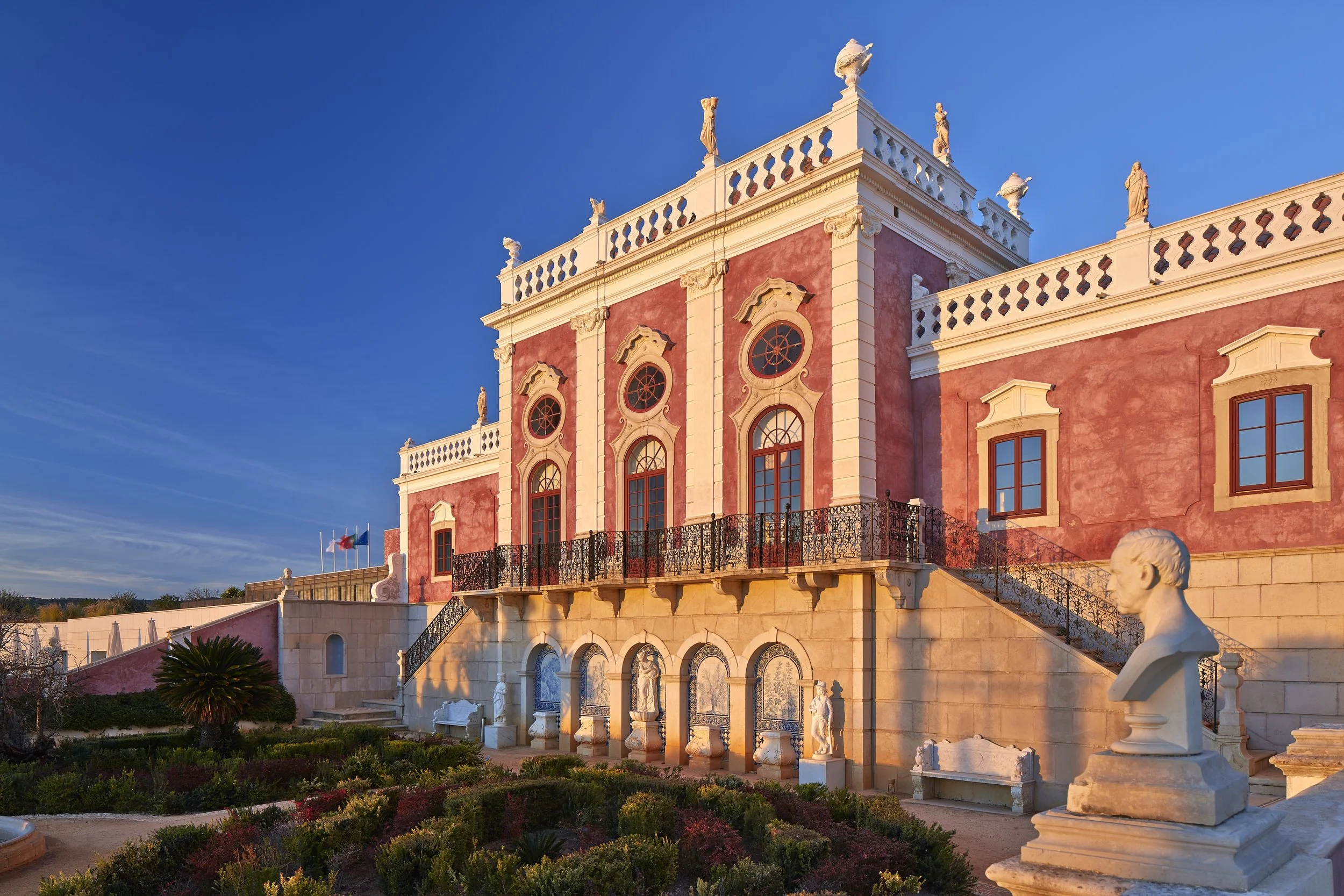
Estoi Palace (©visitalgarve.pt)
7. Estoi Palace and Milreu Ruins
Location: Estoi, approximately 10 km north of Faro.
Getting there: Take the N2 road toward Estoi.
Parking: Free street parking is available throughout the village of Estoi.
About: The Palácio de Estoi is a pink Rococo palace with lush terraced gardens filled with fountains and tiles. Nearby lie the Milreu Roman Ruins, featuring well-preserved mosaics from a 1st-century villa.
Curiosities: The palace was recently converted into a luxury pousada (hotel), but the main halls and gardens remain open to the public for free visits.
Nearby: Explore the quiet, traditional village of Estoi and its 15th-century parish church.
Regular events in Faro
Faro hosts several annual events that showcase its cultural and social vibrancy:
Charolas Festival (January): A traditional celebration featuring groups singing improvised verses to celebrate the New Year.
International Motorcycle Rally (July): One of Europe's largest biker gatherings, filling the city with concerts and parades.
Ria Formosa Festival (July/August): A culinary festival dedicated to the seafood of the lagoon, held at Largo de São Francisco.
Festival F (September): The last major summer festival in Portugal, taking over the Old Town with multi-genre music, art exhibitions, and street food.
Santa Iria Fair (October): One of the oldest fairs in the region, featuring traditional crafts, food stalls, and entertainment.
