
The driving guide to some of the best accessible beaches in the Algarve
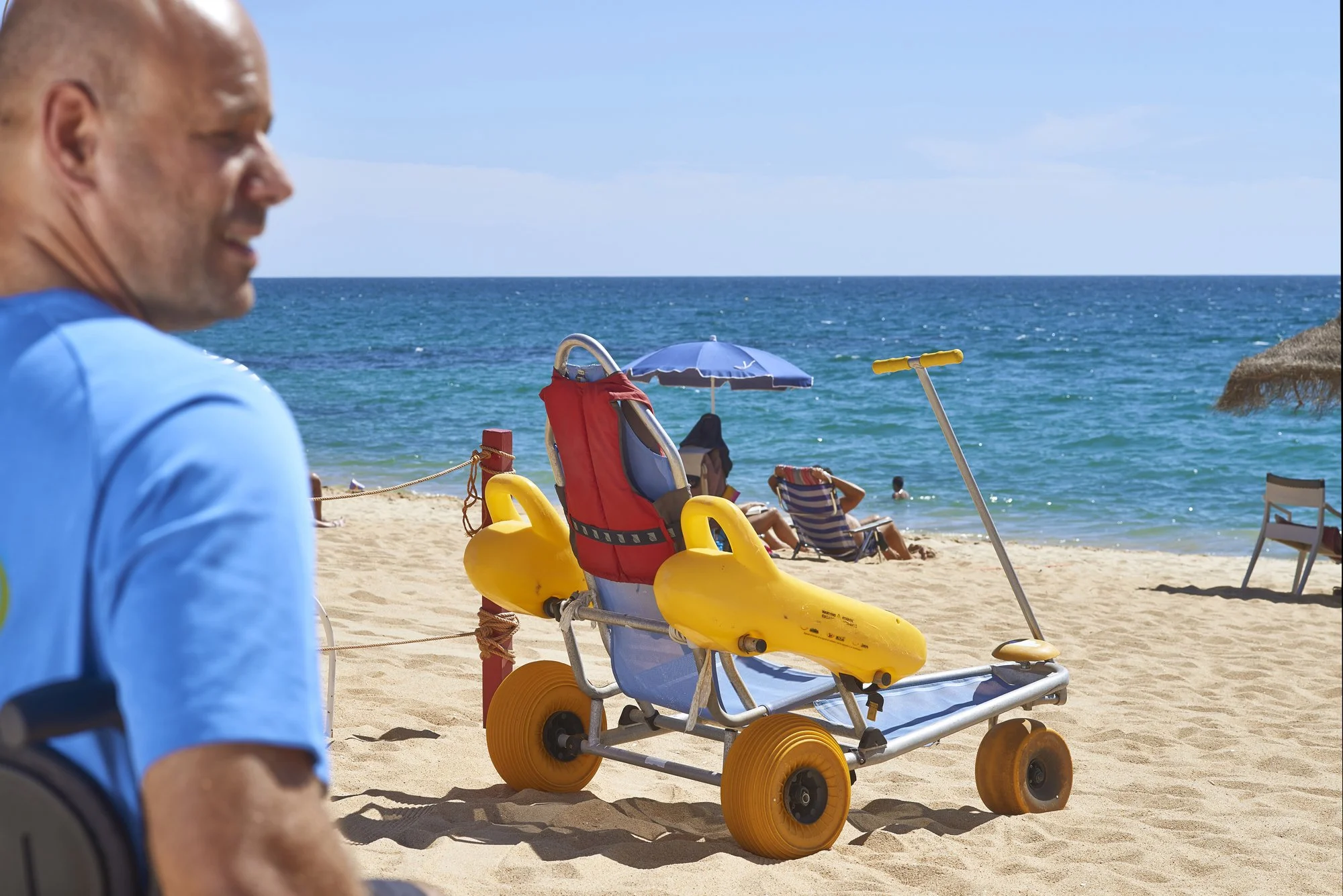
Amphibious chair at Vilamoura beach ©visitalgarve.pt
The Algarve is famous for its dramatic cliffs, golden sand, and turquoise waters. However, enjoying its world-class coastline shouldn’t be limited by mobility challenges. Thanks to Portugal’s national "Praia Acessível – Praia para Todos" (Accessible Beach – Beach for Everyone) program, dozens of coastal stretches across the region offer high-standard accessibility features.
If you are exploring the region by car, driving makes it effortless to hop between these inclusive spots at your own pace. Below is our guide to the top accessible beaches in the Algarve, what officially makes a beach accessible in Portugal, and specific highlights for each destination.
What makes a beach "accessible" in Portugal?
In Portugal, a beach can only fly the official white-and-yellow "Praia Acessível" flag if it meets strict legal criteria designed to guarantee full autonomy or assisted access for people with reduced mobility.
To earn this distinction, a beach must provide:
Ramp or flat pedestrian access: Step-free pathways connecting the road and parking area directly to the sand.
Reserved parking: Designated, clearly marked disabled parking spaces close to the main entrance.
Continuous boardwalks: Smooth wooden or paved walkways extending across the dry sand toward the tide line.
Adapted sanitary facilities: Accessible restrooms, showers, and changing areas equipped with grab bars and step-free entries.
Lifeguard assistance and amphibious chairs: Trained lifeguard personnel on duty during the official bathing season and availability of amphibious wheelchairs (cadeiras anfíbias) for safe ocean bathing.
1. Meia Praia (Lagos)
Located just east of historic Lagos, Meia Praia is one of the longest continuous stretches of sand in the western Algarve. Its gentle topography and sweeping views over Lagos Bay make it a premier choice for visitors seeking stress-free access.
Meia Praia eliminates the cliff barriers common in the western Algarve. The beach features long, wide wooden boardwalks starting directly at the paved parking spaces and running well onto the sand. Multiple restaurant concessions along the beach feature ramped entrances and fully equipped accessible toilets. During the summer season, lifeguards assist visitors with amphibious wheelchairs.
How to get there by car
From the N125 or A22 highway, follow signs toward Lagos and cross the drawbridge over the Ribeira de Bensafrim onto the R269. Follow the coastal road east. Multiple dedicated parking lots run parallel to the beach, featuring paved handicap spots right at the base of the boardwalk entrances.
What to see and do nearby
Lagos Marina: Drive 5 minutes into town to stroll along the flat, paved promenade lined with cafés and boat charter stalls.
Lagos Historic Center: Explore the old town's waterfront areas and visit the municipal market (Mercado Municipal).
2. Praia de Alvor (Portimão)
Stretching for kilometers between the open Atlantic and the peaceful Alvor Lagoon, Praia de Alvor offers a calm atmosphere and wide-open, level landscapes.
Praia de Alvor stands out for its seamless connection between parking, nature trails, and the ocean. Long elevated wooden walkways allow easy navigation over the dunes without stepping onto soft sand. The beach station provides adapted restroom facilities and amphibious chair support during the bathing season, allowing guests to enter the sea safely with lifeguard assistance.
How to get there by car
Take the A22 (Exit 4) or the N125 directly toward Alvor. Follow Avenida da Torralta toward the sea. Large, level asphalt parking lots sit right next to the beach boardwalks, offering ample reserved spaces for mobility badge holders.
What to see and do nearby
Alvor boardwalk and Nature Reserve: A fully accessible wooden walkway extends over 5 km across the marshlands, ideal for birdwatching and scenic, level sunset walks.
Alvor village: Dine at traditional seafood restaurants in the charming village center.
3. Praia dos Barcos / Armação de Pêra-Nascente (Silves)
Located at the eastern end of the sweeping Armação de Pêra bay, Praia dos Barcos (also known as Armação de Pêra-Nascente) combines traditional fishing heritage with top-tier accessibility services.
This beach is renowned for its dedicated assisted bathing service (serviço de apoio ao banho). During the summer season, qualified personnel and lifeguards are on hand to assist visitors with amphibious wheelchairs (cadeiras anfíbias), ensuring safe and comfortable ocean bathing for individuals with motor disabilities. The flat coastal terrain provides seamless access from the main pedestrian promenade onto wide wooden walkways on the sand, alongside reserved disabled parking and adapted restrooms.
How to get there by car
From the N125, take the turnoff for Armação de Pêra via the M524. Follow signs to the beachfront area along Via de Cintura Poente or Avenida Beira-Mar. Park in the paved lots near the eastern side of the town promenade, where reserved handicap bays sit within short range of the assisted bathing station.
What to see and do nearby
Armação de Pêra seafront promenade: Roll or walk along the wide, paved pedestrian promenade lined with ice cream shops, cafés, and ocean views.
Nossa Senhora da Rocha: Drive 8 minutes west to visit the dramatic promontory and its historic chapel, featuring cliff-top parking and paved viewpoints.
4. Praia dos Pescadores (Albufeira)
Nestled directly in front of Albufeira's iconic Old Town, Praia dos Pescadores (Fishermen's Beach) provides full town-to-sand convenience without requiring steep cliff descents.
Despite being nestled beneath towering cliffs, Albufeira’s municipality built dedicated public infrastructure—including outdoor escalators and a cliffside elevator—to transport visitors down from the town level directly to the beach promenade. From there, flat paved walkways lead to wooden ramps on the sand. Amphibious chairs and lifeguard assistance are available on site during summer.
How to get there by car
From the A22 or N125, head south into Albufeira via the N395. Park at the central garage or near the escalators at Pau da Bandeira.
During peak summer months, drop off passengers with limited mobility at the beachfront drop-off zone before parking.
What to see and do nearby
Albufeira Old Town Square: Enjoy level, paved access to bustling outdoor cafés, restaurants, and live street music.
Pau da Bandeira viewpoint: Take panoramic photos over the coastline.
5. Praia do Inatel (Albufeira)
Located just east of Praia dos Pescadores, Praia do Inatel sits in a gentle bay backed by the hotel complex from which it takes its name, offering a slightly calmer atmosphere while remaining close to the heart of Albufeira.
Praia do Inatel features direct paved access and ramped entrances leading from the parking area to the beach front. Wooden boardwalks stretch across the sand, connecting key areas to the water's edge. The beach is equipped with designated disabled parking spaces nearby, adapted restroom facilities, and lifeguard assistance during the summer season along with amphibious chair availability.
How to get there by car
From the N395 entering Albufeira, follow signs toward Inatel or Avenida Infante Dom Henrique. Drive along Avenida 25 de Abril toward the coast. There is dedicated roadside parking and parking areas near the Inatel hotel complex with reserved handicap bays close to the access ramps.
What to see and do nearby
Albufeira coastal promenade: Enjoy a gentle stroll or roll along the coastal path connecting Inatel back toward the Old Town beaches.
Avenida Francisco Sá Carneiro (The Strip): Drive 5 minutes east to explore Albufeira's lively dining and shopping district.
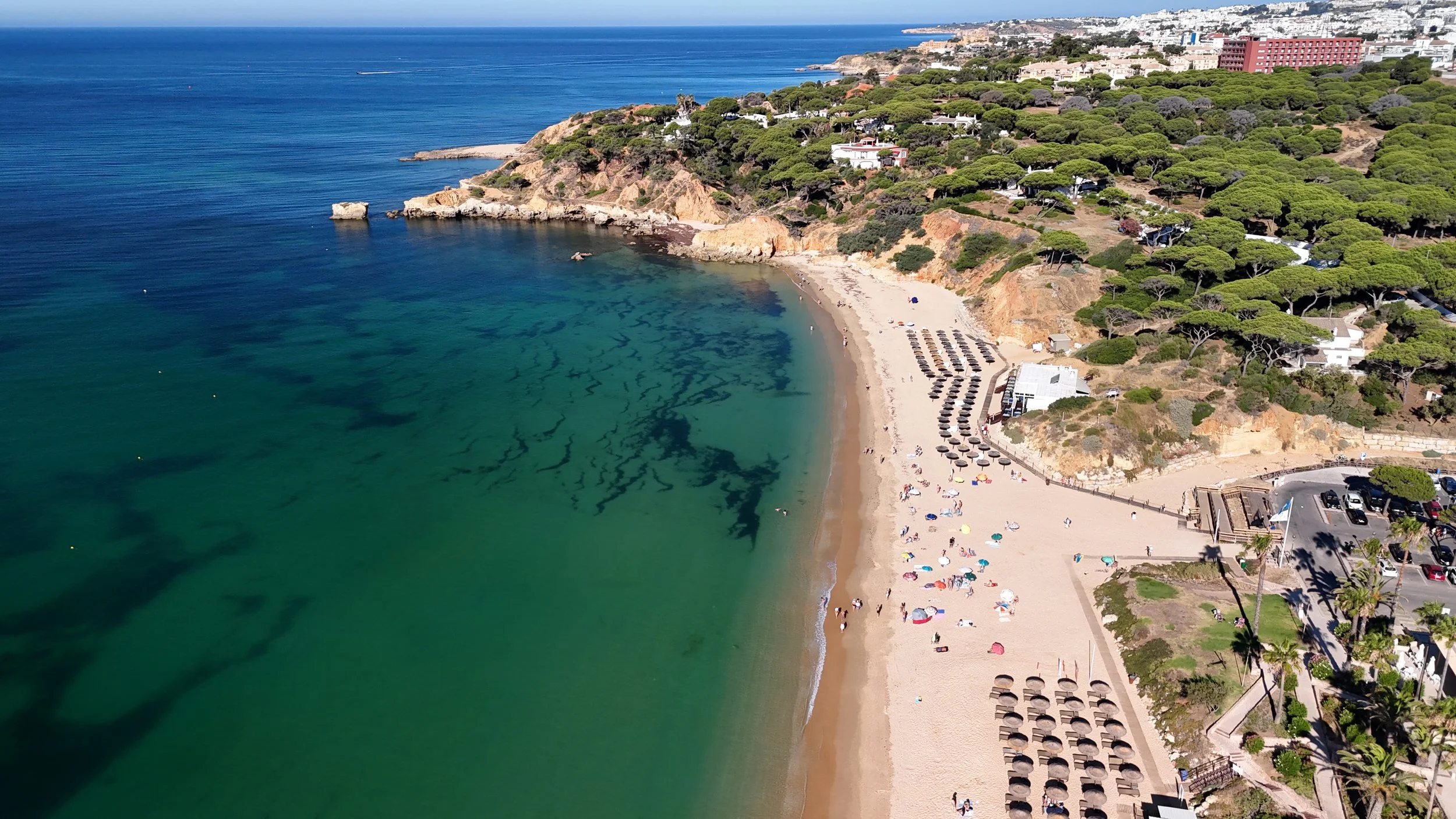
Aerial view of Praia de Santa Eulália
6. Praia de Santa Eulália (Albufeira)
Set in a picturesque cove framed by low cliffs and pine trees, Praia de Santa Eulália combines stunning natural scenery with high-standard, modernized facilities.
Unlike many cliff-backed coves in the region, Santa Eulália offers gentle, paved ramp access leading from the parking level right down to the sand level. A broad wooden boardwalk extends onto the beach, allowing easy maneuvering. The site features dedicated accessible parking bays, fully adapted public restrooms, step-free access to beachfront restaurants, and seasonal amphibious wheelchair assistance.
How to get there by car
From the N125 or A22, take the exit toward Albufeira / Olhos de Água onto the M526. Follow signs toward Santa Eulália. Head down Estrada de Santa Eulália until you reach the large paved parking area located right behind the beach. Reserved disabled parking spaces are positioned near the top of the beach access ramp.
What to see and do nearby
Olhos de Água village: Drive 5 minutes east to visit this neighboring coastal village, famous for its freshwater springs on the beach (olheiros).
Balaia Golf course: Golf enthusiasts can visit the nearby course facilities, featuring accessible clubhouses and driving ranges.
7. Praia de Quarteira and Vilamoura (Loulé)
If you love flat sea promenades lined with palm trees, Praia de Quarteira and neighboring Praia de Vilamoura are among the most accessible coastal areas in Portugal.
Quarteira’s entire beachfront is bordered by a wide, completely flat promenade (Calçadão). There are no stairs required to reach the sand; instead, wide, gentle ramps connect the sidewalk to wooden beach tracks. The beach offers reserved parking along the seafront avenue, accessible public restrooms, and seasonal amphibious chair services for water access.
How to get there by car
From the N125, take the turnoff toward Quarteira / Vilamoura via the N396. A continuous coastal road runs behind Quarteira Beach with designated blue-badge parking bays scattered along the promenade.
What to see and do nearby
Vilamoura Marina: Drive 5 minutes west to park and stroll around Portugal’s largest marina, fully accessible with flat wooden and paved walkways.
Quarteira Fish Market: Visit the local seafood and produce market, featuring step-free entrance ramps.
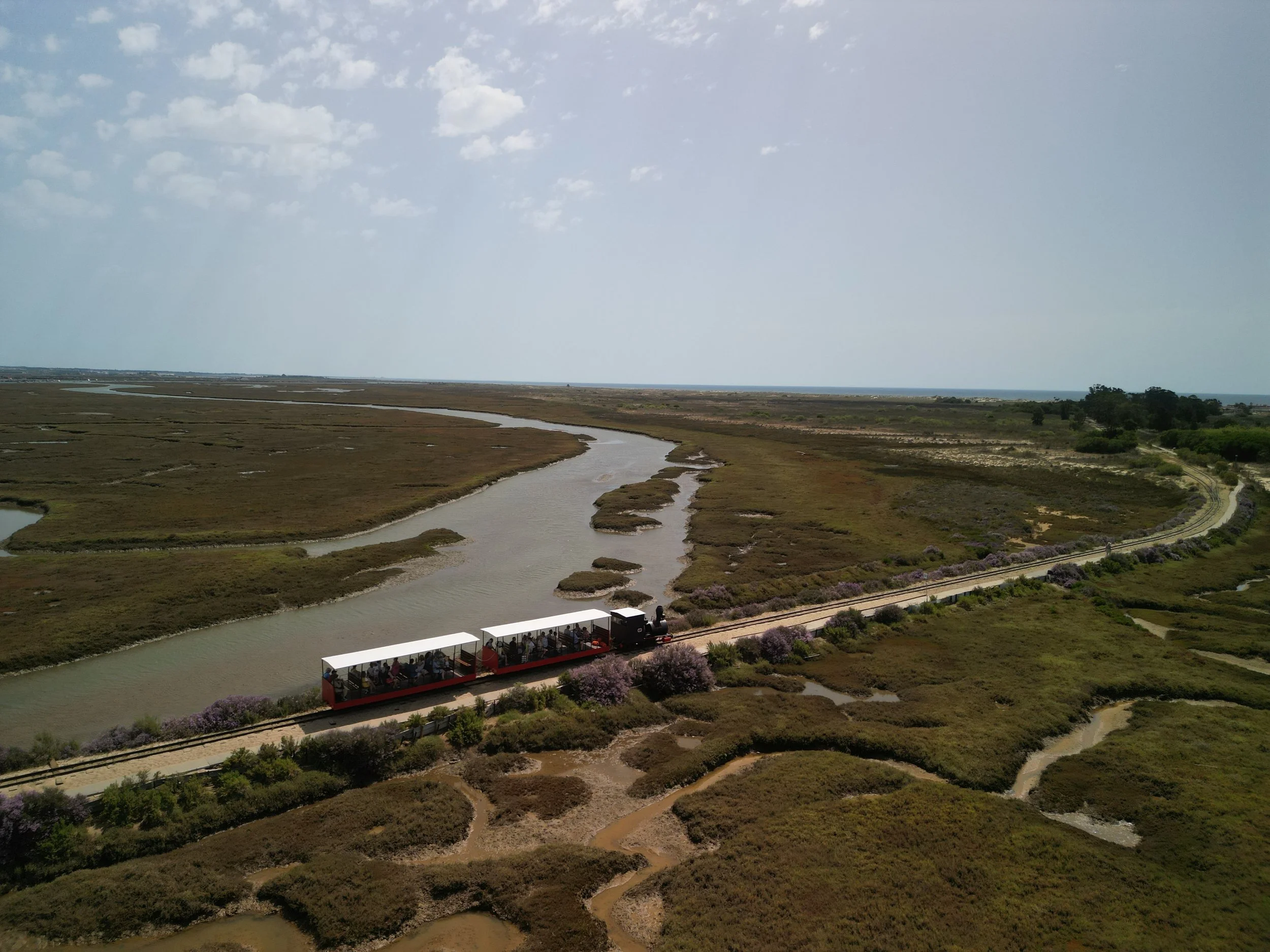
Train that provides access to Praia do Barril
9. Praia do Barril (Tavira)
Praia do Barril offers a unique coastal experience backed by pristine dunes and famous historical landmarks.
What makes Praia do Barril remarkable is its scenic transition from the mainland across the marshlands. Visitors cross a flat footbridge over the estuary and can board a charming miniature narrow-gauge train (Comboio do Barril), which is step-free and easily accommodates passengers with reduced mobility. Once on the island side, long wooden boardwalks connect the train terminus directly to the sand, adapted restrooms, restaurants, and the seasonal amphibious wheelchair support area.
How to get there by car
From the N125 east of Olhão, follow signs toward Pedras d'El Rei / Santa Luzia. Drive directly into the Pedras d'El Rei resort area, where large paved and gravel parking lots sit adjacent to the Ria Formosa footbridge. Dedicated disabled parking bays are situated near the bridge entrance.
What to see and do nearby
The Anchor Cemetery (Cemitério das Âncoras): Located right on the dunes behind the beach, this historic open-air monument displays hundreds of rusty anchors used by former tuna fishing fleets.
Santa Luzia: Drive 5 minutes to the neighboring fishing village of Santa Luzia, famous as the "octopus capital" of the Algarve, featuring a flat waterfront promenade and accessible seafood restaurants.
10. Praia de Monte Gordo (Vila Real de Santo António)
Situated near the Spanish border, Praia de Monte Gordo boasts some of the warmest, calmest waters in the Algarve, paired with an exceptionally wide, flat sandbank.
Monte Gordo is renowned for having one of the most comprehensive boardwalk networks in the eastern Algarve, spanning the entire length of the beach and connecting directly to restaurants, terraces, and parking areas. The flat terrain makes rolling or walking effortless. It offers dedicated handicap parking right on the beachfront avenue, adapted toilets, and amphibious wheelchair support during the lifeguard season.
How to get there by car
Drive east on the A22 (Exit 18) or take the scenic N125 east past Tavira into Monte Gordo. Park along the wide beachfront avenue (Avenida Infante Dom Henrique), which offers abundant accessible parking spots within a short range of the sand ramps.
What to see and do nearby
Vila Real de Santo António: Drive 10 minutes east to this historic border city, planned on a smooth, flat grid layout that is very easy to navigate.
Castro Marim Marshland Reserve: Explore the nature reserve drives and flat salt pan views nearby.
Quick tips for renting and driving an accessible car in the Algarve
Vehicle selection: Choose an automatic transmission car with a spacious trunk if traveling with folding wheelchairs or mobility equipment.
Blue badge parking: EU and international disabled parking permits are recognized in Portugal. Display them clearly on your dashboard.
Bathing season: Amphibious chair services and dedicated lifeguard assistance operate during the official beach season (generally June 1 to September 30).
